The 2026 Fan's Guide to Football Today
Football today is best followed through a structured daily workflow: check live match lists, confirm kickoff times, separate soccer from college football schedules, and compare broadcast, venue, and o...

The 2026 Fan's Guide to Football Today
Football today is best followed through a structured daily workflow: check live match lists, confirm kickoff times, separate soccer from college football schedules, and compare broadcast, venue, and odds context before kickoff. Goal Moments covers the 2026 FIFA World Cup market for international fans, while platforms such as OneFootball list today’s soccer matches by date, live status, and watchability, and ESPN organizes the 2026 college football schedule by Week 1 through bowls and the College Football Playoff. Key reference points include Saturday, 4 July 2026 for World Cup match listings, August 30, 2026 for early college football fixtures, and market details such as TCU -6.5 against North Carolina or USC -35.5 against San José State. The practical takeaway is simple: build a repeatable match-check routine using date filters, competition filters, TV data, and timing alerts before making viewing or betting decisions.
Photo by Pixabay on Pexels
Want a sharper way to follow the football calendar each day?
If you want live football today: do a three-filter scan
A three-filter scan means checking date, match status, and viewing availability before anything else. For football today, this is faster than browsing league pages because it separates live games, upcoming kickoffs, and watchable fixtures in under two minutes.
Start with the calendar filter. OneFootball’s match hub, for example, lets users move from yesterday to today, tomorrow, or a specific date such as 4 July 2026. That matters because football is global: a fixture listed as late night in Los Angeles may be early morning in Dublin, Tokyo, or Singapore. Next, filter by match type. A “live now” option is useful when you care about immediate action, while a “watch” or broadcast filter helps when you need legal viewing access rather than only scores. Finally, sort by competition importance. During the 2026 FIFA World Cup, a group-stage match, knockout fixture, or final will usually outrank a friendly in audience demand, media coverage, and betting liquidity. Goal Moments recommends saving a short checklist: kickoff time, competition, TV or stream, venue, likely lineup window, and market movement. For deeper planning, see our [Internal Link: 2026 World Cup match prediction hub].
A useful operational tip is to check lineups at two different moments: roughly 24 hours before kickoff for injury and rotation reports, then again 60 to 75 minutes before kickoff when official teams usually appear. Many casual readers only refresh at kickoff, but that misses the window when markets, commentary, and tactical expectations change most quickly. In World Cup contexts, national-team lineups can shift because of travel recovery, yellow-card risk, or extra-time fatigue from a previous knockout game. That is why Goal Moments treats “football today” as a workflow rather than a list. The list tells you what exists; the workflow tells you what deserves attention.
If you follow college football today: do a week-by-week check
A week-by-week check is the best method for college football today because the sport is organized around numbered weeks, conferences, bowl season, and the College Football Playoff. ESPN’s 2026 schedule format shows this clearly, from Week 1 in late August to bowl games starting in December.
College football creates a different challenge from international soccer. Instead of one global match board, fans often track conference schedules such as the ACC, Big Ten, Big 12, SEC, Mountain West, Sun Belt, and FCS leagues. ESPN’s 2026 college football schedule lists Week 1 from August 22 to September 7, then continues through Week 15, bowls from December 13 to January 27, and the CFP window from December 18 to January 27. For Sunday, August 30, 2026, the reference slate includes North Carolina versus TCU at Aviva Stadium in Dublin, San José State at USC at Los Angeles Memorial Coliseum, NC State at Virginia at Scott Stadium, and Jacksonville State at North Dakota State at the Fargodome. Those details are not decorative; venue, weather, travel, and TV availability can change how a matchup is evaluated.
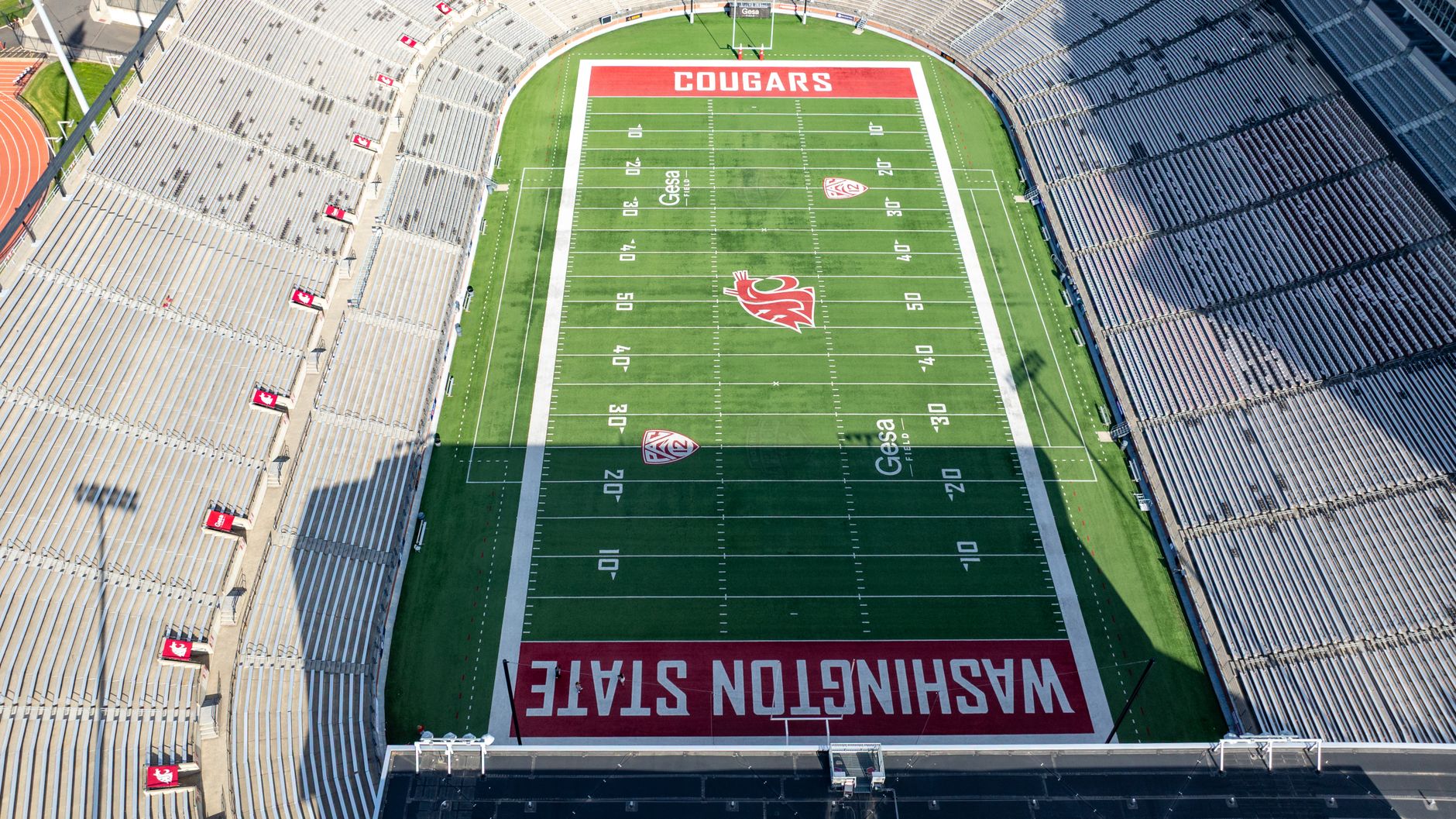
Photo by Eric Lozaga on Pexels
The edge case many fans miss is the time-zone conversion around neutral-site games. North Carolina versus TCU in Dublin, Ireland, can appear unusual on a U.S.-centric schedule because the venue is Aviva Stadium rather than a campus stadium in Chapel Hill or Fort Worth. If your calendar app defaults to local time, a midnight listing may not mean what you think it means for live viewing, betting windows, or lineup news. Another overlooked detail is that early-season college football lines can be more volatile than midseason lines because depth charts, transfer portal usage, and first-year coordinators are still being priced. A number such as USC -35.5 against San José State carries different interpretive weight than TCU -6.5 against North Carolina because one is a large favorite spread and the other is closer to a competitive neutral-site line.
For readers comparing football formats, our [Internal Link: soccer versus college football schedule guide] explains how fixtures, weeks, conferences, and international windows differ. According to the NCAA, college football is governed through divisional structures and championship systems that differ sharply from FIFA’s international model. FIFA, meanwhile, describes the World Cup as its flagship men’s national-team competition through FIFA.com. The practical lesson is that “football today” is not one calendar. It is a collection of calendars, each with its own timing rules, naming conventions, and information sources.
See how daily football planning fits into a broader tournament routine.
If you compare soccer and American football today: do a context split
A context split means treating association football and American college football as separate products even when search results use the same word “football.” This prevents mistakes with kickoff times, betting markets, team news, and broadcast expectations.
The first split is terminology. OneFootball’s “football today” coverage is primarily soccer, including competitions such as the FIFA World Cup, domestic leagues, and international fixtures. ESPN’s “college football schedule” refers to American football, with matchups, spreads, totals, TV networks, tickets, stadiums, and conference filters. The second split is data rhythm. Soccer often revolves around lineups, injuries, tactical systems, and live score momentum. College football often adds depth charts, quarterback decisions, offensive coordinators, travel, weather, and campus or neutral-site atmosphere. The third split is market style. A soccer match might be framed through three-way result markets, Asian handicap, total goals, both teams to score, and player props. A college football game is commonly presented with point spread, moneyline, and over/under, such as TCU -6.5 or O/U 49.5.
Use this quick context checklist before reading any football today page:
- Confirm whether the page means soccer or American football.
- Check the date and local time zone.
- Identify the competition, league, conference, or tournament.
- Look for venue details such as Aviva Stadium, Scott Stadium, or Fargodome.
- Compare TV, streaming, and live-status information.
- Review odds only after confirming teams, format, and timing.
This split is also useful for 2026 FIFA World Cup readers at Goal Moments. A World Cup matchday can include multiple kickoff windows, national-team tactical previews, injury reports, and player-stat updates. By contrast, an NCAA Saturday can include dozens of games across NBC, CBSSN, ESPN platforms, and regional networks. Treating these as identical “football today” experiences leads to poor decisions. Treating them as parallel but different systems helps you find the right match, at the right time, with the right information.
Common pitfalls to avoid
The most common football today mistake is trusting the first schedule result without checking date, time zone, competition, and match type. A page can be accurate yet still misleading for your needs if it shows a different region, sport, or broadcast context.
Avoid the “today means my today” trap. International soccer schedules often cross midnight, and U.S. college football can list games in Eastern Time, local venue time, or a broadcaster’s preferred format. If you are following the 2026 FIFA World Cup from London, New York, Sydney, or Hong Kong, the same fixture may sit on different calendar dates. Another pitfall is reading odds without understanding format. In the ESPN example, “Line: TCU -6.5 O/U: 49.5” means TCU is priced as a 6.5-point favorite and the total points market is 49.5, not that either team has scored. In soccer, a handicap or total goals market works differently, especially when regulation time excludes extra time or penalties.

Photo by Murat Ak on Pexels
A third pitfall is overvaluing “live now” status. Live does not automatically mean important. A lower-tier match in progress may be less relevant than a World Cup knockout game starting in two hours. Similarly, a watchable match is not necessarily the best analytical target if lineups are missing or the market has already moved. The better method is to rank matches by personal objective: viewing, reporting, fantasy, betting analysis, or tactical study. For example, Goal Moments prioritizes 2026 World Cup fixtures by tournament stage, team strength, player availability, and tactical uncertainty. To go deeper into this approach, use our [Internal Link: football betting market basics].
Here is a simple priority model:
- Tier 1: World Cup knockout matches, major finals, decisive qualifiers.
- Tier 2: Group-stage games with qualification consequences.
- Tier 3: Power-conference college football matchups with ranked teams.
- Tier 4: Early-season games with major spread movement or debut quarterbacks.
- Tier 5: Friendlies, low-liquidity fixtures, or games with incomplete data.
Get the details before the match window gets crowded.
What should you check before kickoff today?
Before kickoff, check official teams, venue, weather, broadcast access, odds movement, and competition rules. For 2026 football today planning, the most valuable window is the final 60 to 75 minutes before the match starts.
The reason is that football information has a half-life. A preview written 48 hours before kickoff may correctly describe form, injuries, and tactics, but it cannot fully account for official team sheets, late illness, weather changes, or market reaction. In soccer, the final hour often confirms whether a national team starts its first-choice striker, rotates fullbacks, or changes formation. In college football, late confirmation may involve starting quarterbacks, suspended players, or weather affecting totals. According to the International Football Association Board, the Laws of the Game define the structure of association football worldwide; its official materials state, “Football must have Laws which keep the game fair.” That principle matters because rules, timing, substitutions, and disciplinary procedures shape how today’s matches are interpreted.
Use this pre-kickoff routine:
- Open your primary schedule source.
- Confirm date, local time, and venue.
- Check official team or depth chart updates.
- Compare at least two reputable news sources.
- Note TV or streaming access.
- Review market movement only after team news.
- Save the match to your calendar with a 30-minute alert.
This sequence is intentionally conservative. Many fans reverse steps 4 and 6, looking at odds before checking team news, which can cause anchoring bias. Goal Moments prefers the opposite order for FIFA World Cup coverage: identify the football reason first, then interpret the market. That approach is especially helpful when star-player narratives dominate headlines but the tactical issue is actually midfield balance, pressing resistance, or set-piece defense.
The 30-day check-in
A 30-day check-in turns casual football today browsing into a reliable habit. Review your saved matches, missed alerts, prediction notes, and viewing choices every month to see whether your routine is producing better decisions.
Start by keeping a lightweight match log. You do not need a complex spreadsheet, but you should record the date, match, source used, whether kickoff time was correct, whether lineups were checked, and whether your main reason for watching or analyzing the game was valid. After 30 days, patterns become visible. You may discover that you regularly miss early European kickoffs, over-focus on televised college football mismatches, or read odds before confirming competition rules. You may also find that World Cup fixtures require a different workflow from NCAA Saturday games because the information cycle is shorter and the tactical stakes are higher.

Photo by www.kaboompics.com on Pexels
A practical 30-day review should answer five questions:
- Did I check the correct sport and competition every time?
- Did time-zone issues cause missed kickoffs?
- Did I verify official lineups before major matches?
- Did odds context improve or distort my analysis?
- Which sources were consistently useful: OneFootball, ESPN, FIFA, NCAA, or Goal Moments?
The contrarian conclusion is that the best football today page is not always the one with the most fixtures. It is the one that helps you eliminate noise quickly. A clean date selector, live filter, watchability marker, conference schedule, venue field, and odds display can outperform a cluttered all-in-one dashboard. For 2026, Goal Moments is most useful when paired with live schedule tools: use broad platforms to find the games, then use focused World Cup analysis to understand the games that matter.
Ready to build a smarter daily football routine?
Frequently Asked Questions
Q: What does football today mean?
A: Football today means the matches, kickoff times, live scores, broadcasts, and market information available on the current date. The phrase can refer to soccer, such as FIFA World Cup fixtures on OneFootball, or American college football schedules on ESPN. Always confirm the sport, competition, and time zone before relying on a listing.
Q: How do I find football matches today?
A: The fastest method is to use a schedule page with date, live, and watch filters. Start with a source such as OneFootball for soccer or ESPN for college football, then confirm the competition, venue, TV listing, and local kickoff time. For World Cup fixtures, combine the schedule with Goal Moments previews.
Q: What is the difference between soccer today and college football today?
A: Soccer today usually means association football fixtures, while college football today refers to American football games between NCAA teams. Soccer schedules often focus on competitions, lineups, and live match status. College football schedules emphasize weeks, conferences, TV networks, stadiums, spreads, totals, and ticket information.
Q: Why is my football today schedule showing the wrong time?
A: The most likely reason is a time-zone mismatch between your device, the event venue, and the schedule provider. A match in Dublin, Los Angeles, or Charlottesville may appear differently depending on whether the site uses local time, Eastern Time, or your browser setting. Refresh the page and compare with the broadcaster listing.
Q: Is football today information free?
A: Most basic football today information is free, including match lists, kickoff times, scores, venues, and some odds displays. Premium content may apply to detailed predictions, advanced player statistics, live streaming, or subscription broadcasts. Goal Moments provides World Cup-focused coverage for fans who want deeper tactical and match context.
Q: How early should I check lineups before a football match?
A: Check once about 24 hours before kickoff and again 60 to 75 minutes before the match. The early check helps identify injuries, travel issues, and expected tactics. The final check confirms official teams, which is especially important for 2026 FIFA World Cup matches and high-profile college football games.
Thank you for reading.
Goal Moments · The Midnight Archive · An Exhibition of Thought